passive Neurospecific stimulation (pNSS)
Musculoskeletal Treatments
INJURIES, surgery and pain to the low leg, foot and ankle can induce localised, protective muscle tension, termed Muscle Guarding. Whilst this can resolve over a moderate period of time (few months), in some instances it may be sustained and, in more extreme cases, this may be involve post-trauma dystonia.
SYMPTOMS of muscle guarding can include foot and ankle pain, stiffness in the foot and ankle when walking or running, loss of confidence in balancing on your foot and ankle, reduced range of movement, sense of running differently than before injury.
PNSS involves applying a gentle, subtle motion to tissues around the ankle to stimulate possible positive change. It can sometimes be used on its own, or, be part of an overall treatment approach.
THE AIM of the stimulus is to encourage a relaxation of tight muscles in the region, helping restore usual muscle motion and improve your ability to be active again. This also aids with our recommended exercises.
TREATMENT BENEFITS
1. Examples of patients feed back: “I feel like my foot is flatter to the floor”; “I’m walking through my foot in the same as my other now”; “My foot feels more stable again”; “My running pattern on the foot feels like before”.
2. Can add to a sense of confidence in your stability and balancing on the affected foot and ankle.
3. May aid in pain reduction as part of an overall approach to rehabilitation of surgery or injury.
4. Can benefit post foot and ankle injury/surgery rehabilitation, even years later.
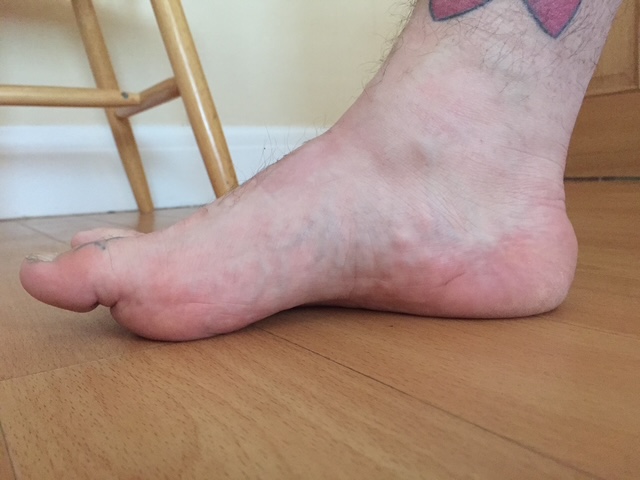
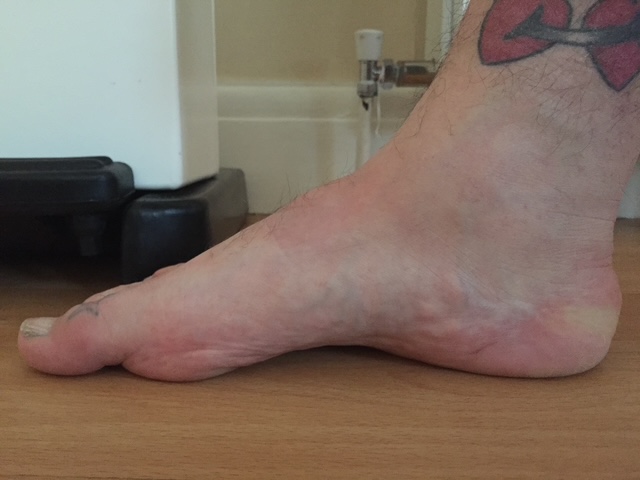
The upper image is pre-treatment, the lower image is post treatment. Images are copyright to Ian Linane.